


We Won the 2026 Defender Service Awards!
We’re beyond excited to share that Pacific Wildlife Care has been named a 2026 Defender Service Award winner! The award includes a customized Defender 130 and $30,000 to support our work. We’re incredibly grateful to everyone who voted, shared our story, and helped bring this recognition home to the Central Coast.


Help Us Build a Forever Home for Wildlife!
Construction is officially underway on Pacific Wildlife Care’s new home, the Kim and Derrel Ridenour Wildlife Rehabilitation Center in San Luis Obispo! Located on a beautiful 10-acre property, this purpose-built facility will allow us to provide the highest standard of care for wildlife and expand our capacity to better serve the entire community.
Thanks to the incredible generosity of our supporters, we’ve raised more than $11.5 million in gifts and pledges to bring this vision to life. But we’re not done yet and we still need your help to finish construction and open our doors to wildlife and the community.
Behind the Scenes at PWC
Pacific Wildlife Care (PWC) has been an advocate for wildlife in San Luis Obispo County since 1984.
From that time we have grown from a small group of dedicated home rehabilitators into a successful non-profit organization with a well-equipped rehabilitation center, a full-time wildlife veterinarian, a small paid staff, and nearly 200 volunteers. In addition to the Rehabilitation Center, which is open every day of the year, we maintain a Wildlife Hotline that the public can call to report distressed wildlife (injured, sick, orphaned) and to receive information about our local wildlife.

The Latest from PWC
Pacific Wildlife Care News
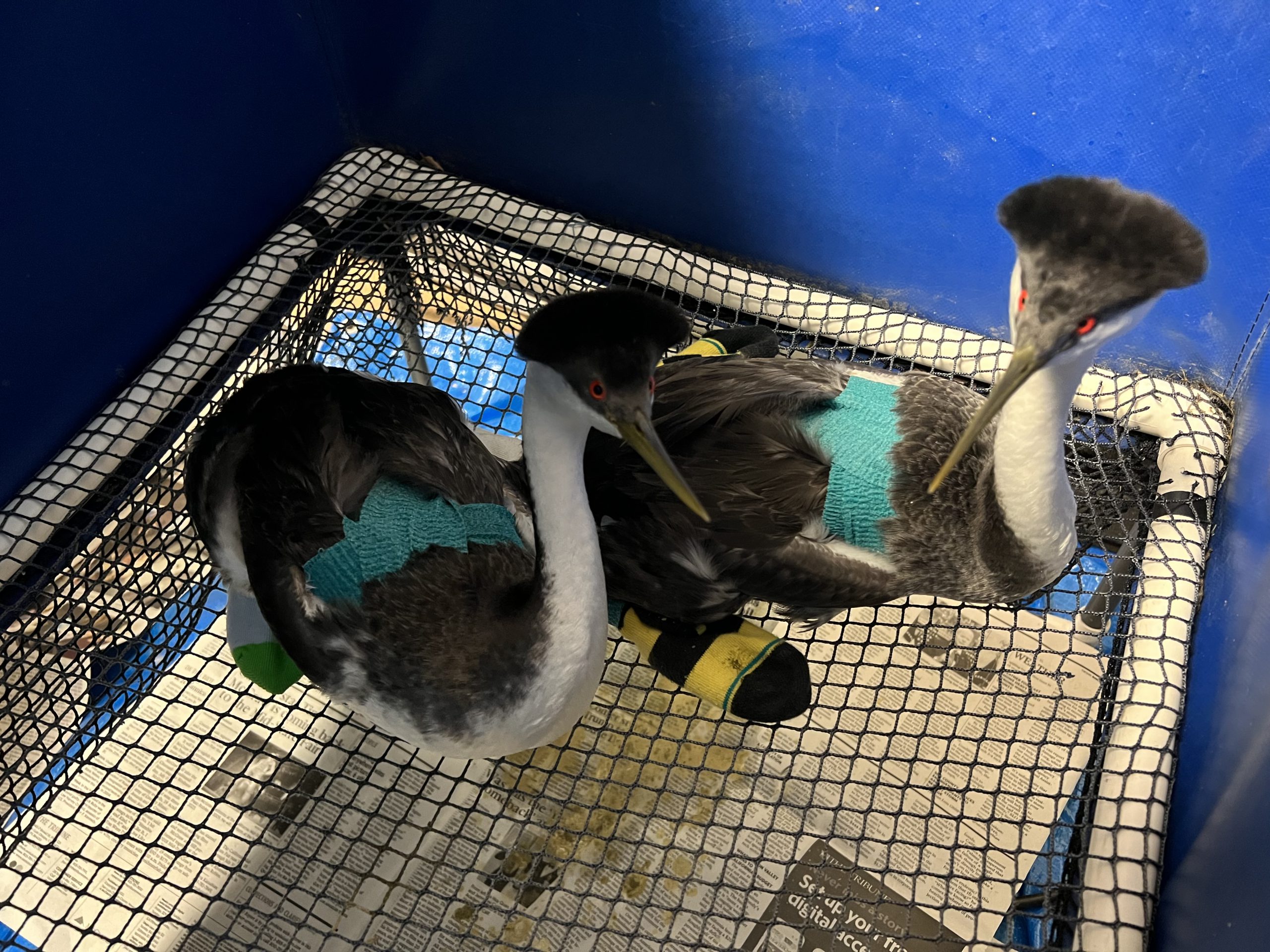
Winter of the Grebes
For a while this season, PWC turned into “Grebe Town.” Western and Clark’s Grebes filled the treatment room, carriers, drying […]

Release Story: RTHA #2717
On Christmas Day, PWC received a call from a Paso Robles resident, Alton, who explained that his kids were playing […]

Facebook Posts
✨ Freedom Friday! Five more Common Murres returned to the ocean off Morro Bay! After time in our care to regain their strength, these seabirds were ready to head back out to sea 🌊
We’re so grateful to Morro Bay Harbor Patrol for once again helping make this release possible. Their team took our Volunteer Coordinator, Heather, and volunteer Valerie out on the water and helped them locate wild murres so they could release our patients alongside them. This kind of partnership makes a real difference, and we can’t thank them enough for their continued support of local wildlife!
Why have so many Common Murres been washing ashore? These seabirds spend most of their lives on the open ocean, where they depend on finding enough fish to maintain their energy reserves. Exceptionally warm ocean temperatures may be affecting the availability of their prey, making it harder for murres to find the food they need. This time of year also brings added energy demands, including molting and young birds leaving their breeding colonies. Many of the murres arriving at our clinic are severely underweight and need time, food, and careful monitoring to recover.
Our team continues to admit and care for murres, and the unexpected costs of food, medical supplies, and staff time add up quickly. If you’re able, a gift helps us keep providing care to the seabirds arriving at our clinic.
💙 Support our wildlife patients: pacificwildlifecare.org/give
If you find a live seabird stranded on the beach, please keep pets away and call our wildlife hotline at 805-543-WILD. We’ll help you determine the best next step. Thank you! 💙
#FreedomFriday #CommonMurre #WildlifeRelease ... See MoreSee Less
🖤🕷️ Have no fear! This time of year, you may see wandering tarantulas out and about. They are often males in search of a female. Please give them space and let them go about their business. They generally want nothing to do with us, but like any wild animal, they can bite to defend themselves if they feel threatened. They may also flick tiny irritating hairs as a defense mechanism. Give these amazing animals the respect they deserve, and whenever possible, let them continue on their way undisturbed. And you can walk away knowing you got to see a really cool wild animal! 🙂
📸 Kelly V.
#Tarantula #spider #pacificwildlifecare #arachnid #wildlife #pleasebekind ... See MoreSee Less
🐟 Holy mackerel! This weekend was one for the record books!
From Friday through Sunday, Pacific Wildlife Care admitted 194 wildlife patients, three of our biggest single-day admission totals in our organization’s history. For comparison, we admitted just 11 patients over the same three days last year.
The biggest reason? Common Murres. We’ve admitted 165 since Friday, bringing our total to 743 since September 1.
🌊 Why are so many murres washing ashore? Common Murres spend most of their lives on the open ocean, but an unprecedented number have recently been washing up along our coast. Exceptionally warm ocean temperatures are likely affecting the availability of the fish they depend on. This time of year also brings newly fledged young still being cared for by their parents, along with molting of new feathers, all of which require extra energy. When fish are harder to find or farther away, murres must work harder to find food, quickly depleting their energy reserves. Most of the birds arriving at our clinic are severely emaciated.
💙 We need your help to keep up with this unprecedented influx.
Our team is working around the clock to care for these birds. We’re arranging additional temporary pools to create more space, going through fluids, medications, and medical supplies, and running incubators and heating pads to keep patients warm. Staff are working overtime and volunteers are putting in long shifts.
Every dollar helps provide care these birds need. If you’re able, please consider making a gift to help cover these unexpected costs.
💙 Give today: pacificwildlifecare.org/give
A huge thank-you to our hardworking staff, dedicated volunteers, generous donors, and community supporters. This response takes all of us, and we’re so grateful to everyone helping us show up for these birds.
And keep swiping for a special guest appearance! 👀 Our Executive Director, Kristin, jumped in to help at the outdoor wash station this weekend. When wildlife need us, everyone pitches in! 💪
#CommonMurre #PacificWildlifeCare #WildlifeRehab #SupportWildlife ... See MoreSee Less
✨ Freedom Friday! Earlier this week, four Common Murres returned to the ocean off Morro Bay after spending 2–3 weeks in our care 🌊
A huge thank you to Morro Bay Harbor Patrol for being such a wonderful partner! They took our team out and helped us locate a flock of wild murres we could release these four alongside, back where they belong. We so appreciate their support and their commitment to helping local wildlife! 💙
Common Murres spend most of their lives on the open ocean, and several factors may be contributing to the unusual number washing ashore. Exceptionally warm ocean temperatures may be affecting the availability of the fish they depend on. This time of year also coincides with young murres leaving their breeding colonies, adults caring for their young at sea, and molting of feathers, all of which require a lot of energy (fish!).
We always aim to release rehabilitated murres alongside wild birds, giving them the opportunity to rejoin others offshore. These four patients were released alongside a loose flock of about 40 wild murres Morro Bay Harbor Patrol helped us find. We hope this head start gives these four the best chance at a successful return to the wild.
We’re still admitting large numbers of murres. If you’re able to help cover the unexpected costs of caring for these seabirds, you can make a gift at pacificwildlifecare.org/give
And if you see a live seabird stranded on the beach, keep pets away and call our wildlife hotline at 805-543-WILD. Our team can help you determine what to do next.
We’re grateful to everyone who has stepped up for these seabirds and to the community partners who help us get them back where they belong. 🌊
#FreedomFriday #CommonMurre #WildlifeRelease ... See MoreSee Less